

Newsstands, Magic Castles, and Community: The Lasting Legacy of Ken Johnson
By The Crystal Valley Echo Staff
Born March 13, 1933, in Grand Junction, Colorado Kenneth E. Johnson was a titanic fixture of local journalism on the Western Slope until he passed away at the age of 92 in Massachusetts on April 20th, 2025. Beginning his career as a paper delivery boy in Grand Junction, at the age of 16 he began working for the Grand Junction Daily Sentinel in their mail room, Ken would go on to climb the journalism ladder at The Sentinel until he eventually rose to the position of publisher in 1970 when then-publisher Preston Walker died of a heart attack while on a rafting trip.
Johnson is best remembered in the history of the Grand Junction Sentinel for a stressful April night in 1974 when the press building of the Sentinel burned to the ground while he attended a series of meetings in Salt Lake City. Johnson spent the entire night on the phone, ensuring the paper would be printed in Glenwood Springs and not miss its daily deadlines. Over the course of that night, he also arranged the purchase of a new printing press, replacement newsprint and secured a plan for a new press office and printing headquarters for the Sentinel. The paper never missed its daily publication.
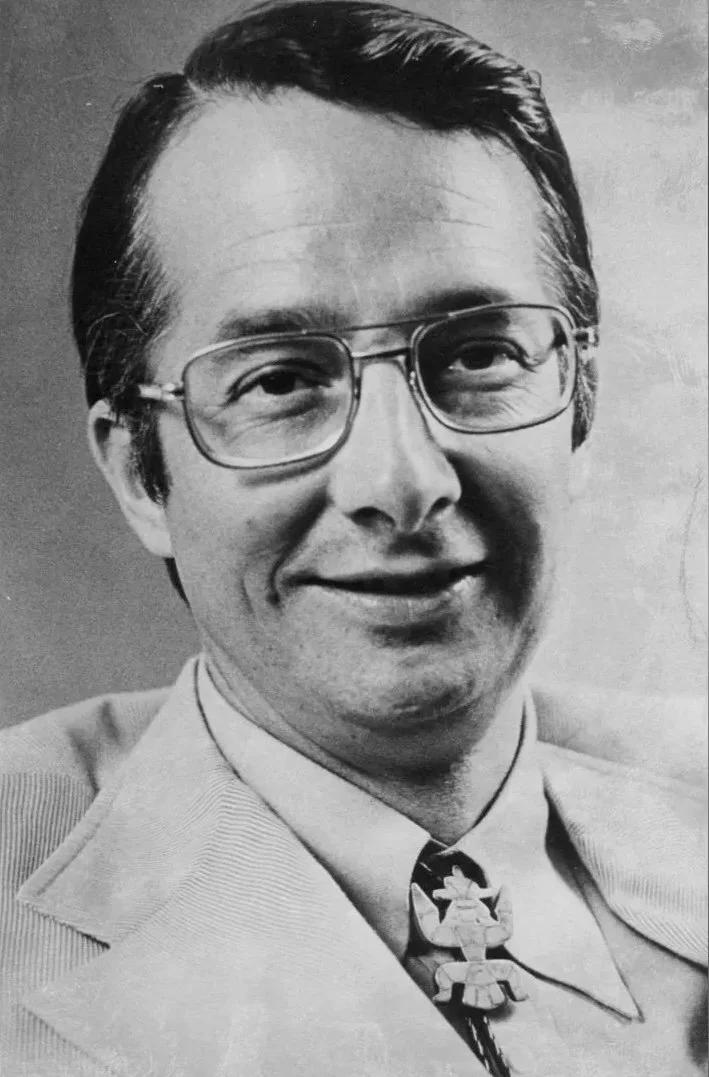
Former Redstone Castle Owner and Grand Junction Daily Sentinel Publisher Ken Johnson passed away at the age of 92 on April 20th, 2025. Photo Courtesy of Colorado Mesa University
Johnson was at his heart a true newsman, fiercely dedicated to both the craft of journalism and his deep love of his home, Colorado’s Western Slope. He attended Mesa College (now Colorado Mesa University) in Grand Junction, covering tuition with paychecks from National Guard duty, and eventually transferred to The University of Colorado to pursue a degree in marketing. He recalled his college years at CU as a “painful chore” and upon his return to Grand Junction he secured his position with The Sentinel as Bureau Chief in Rifle. He would eventually also serve as President of the Colorado Press Association in 1968 and held a lifelong dedication to the craft of journalism.
Johnson would remain publisher of the Grand Junction Daily Sentinel until 1979, when he sold the paper to Cox Enterprises. He became nationally recognized at this time for giving over $1 million in bonuses to the entirety of the staff of the Sentinel upon its sale. Johnson was quoted in the Denver post at the time saying: “I’m laying money on the troops…they are my friends and they’ve been through good, bad, and otherwise. This is a chance to do something for them in a meaningful way.” Johnson would gift over 200 staffers at The Sentinel bonuses ranging from “two or three weeks’ pay” to several thousand dollars with the Denver Post reporting some personal gifts reaching upwards of $40,000. Johnson said that the gifts were a mark of gratitude to his employees for “helping build a solid newspaper, one that has at least a decent reputation.”
In line with sale of the paper and his generous gifts of gratitude to his former staffers, Johnson echoed another historically generous titan of industry in the Western Slope and became the owner of John Cleveland Osgood’s Cleveholm Manor, known affectionately as The Redstone Castle in the Crystal Valley in 1976. When Johnson purchased the Castle, he had effectively “saved it from a wrecking ball” wrote Deb Strom in a previously published Vintage Valley article on the history of the Redstone Inn. By this time, the Castle had been sold at auction and locals recalled truckloads of valuables leaving the estate to be sold elsewhere by the previous owners. By 1982 Johnson had transformed the Castle from a building needing care and restoration to a world-class bed and breakfast and wedding venue. Many high-profile weddings occurred on the Castle estate under his watch including Jimmy Buffet’s. Locals recall many other weddings taking place on the grounds during this era for locals and visitors alike. As an homage to his work in journalism, Johnson would also create unique wedding programs for events at the Castle titled “Redstone News” and resembling small format newspapers printed in ruby ink on cardstock. The “articles” within would profile the wedding party with headshots and photos of the estate and headlines declaring the breaking news of the couple being wed in Osgood’s Ruby of the Rockies. Some of these wedding programs still exist today in the archives of the Redstone Historical Society.
A cornerstone of Johnson’s ethos in owning and operating the Redstone Castle was what he called a need to furnish community trust. In letters referencing the Ponzi scheme dramas of the Castle following his sale of it, Johnson lambasted the line of succession of the estate as people incapable of recognizing the need to not only furnish community trust, but to cherish it. Much like his work at the Sentinel in Grand Junction, Johnson’s approach to owning and operating the Castle came from a love and respect for the communities he came from and lived in.
Former Pitkin County Commissioner Dorothea Farris, who worked for Johnson at the Castle for some years as an office manager, described his ethos and connection to Redstone as one built on “a good-hearted awareness of how to live in and enjoy Redstone while also trying to do as much for the community as he could.” She recalls his dedication to the historical preservation of the Castle, paying out of pocket for appraisals, renovations, repairs and research studies on various elements of the history of the estate and of Redstone. One such research project involved Johnson contacting historians at multiple universities looking to piece together the storied history and legacy of John Osgood’s first wife, novelist and playwright Irene Osgood, arguably beginning the first formal biographical work on her storied career outside of Redstone (look forward to an upcoming edition of Vintage Valley in The Echo for a summary of this research).
Farris also recalls the integrity of Johnson as an employer, stating that after suddenly losing her job at Aspen Valley Hospital, she made a phone call to Johnson, and he told her to “Come on down this afternoon” and by that evening she had a job working with him at The Castle. “He was one of the very good ones” she said to The Echo, and expressed even today a gratitude for his kindness, eccentricities (including a fascination with medieval Bavarian castles, heraldry and coats of arms), and the warmth of his character as an employer at the Castle. She recalls humorously that when she began working in a small bookkeeper’s office under a steep staircase in the Castle, that Johnson had told her some tales of ghosts and hauntings only to then mischievously tap the walls and ceiling of her office at all hours of the day to simulate visitors from beyond the veil.
Following his sale of Cleveholm, Johnson would remain engaged with its history as it passed from his hands onto the next ones. Commenting on the tumultuous era of its ownership following his 1996 selling of the property Johnson reflected on the sales between various groups of investors in a 2005 letter as:
“This unseemly rush to sell for “highest dollar” ignores the public trust. Instead, it favors those poor, innocent “investors” who ought to be whupped for being so greedy and then claiming they were defrauded.”
“There are no widows and orphans in that group,” Johnson further remarked, finishing his letter on the sale with a message to potential investors:
“This whole deal is a problem for all of you. I urge you to get involved with the folks in Redstone and sell the historic castle estate the right way. You will get the best dollar that way, and you will have treated the public the right way.”
Later, Johnson would return to the newsrooms of the Western Slope, creating the Grand Junction Free Press in 2003 which would run until 2015. During his time at the Free Press, Johnson continued his lifelong dedication to the craft, supporting hard hitting stories (including one that would end with a Glenwood Springs district attorney being sentenced to jail in a corruption trial).
He worked in various other realms of publication at this time as well, helping to republish Academy Award winning writer and Western Slope local Dalton Trumbo’s novel “Eclipse” which took place in a lightly fictionalized Grand Junction with Colorado Mesa University.
Ken Johnson’s legacies on the Western Slope, from the newsrooms of Grand Junction to the splendid halls of Osgood’s Castle left marks that will continue long after his passing. His examples set as a true newsman continue to inspire dedication across the modern news landscapes of the region, his ownership of the Castle shines as one of the best eras in the home’s history as being a place where locals and visitors alike could experience the wonder and magic of our own Castle in mountains.
In early 2025 Johnson was diagnosed with an aggressive form of cancer that spread quickly and he entered hospice care, passing away on April 20th, almost 51 years to the day that the Sentinel presses had burned and he had saved the morning edition over the phone.
