

When a Community Shows Up
What the Recent Harvest Roaring Fork Hearings Revealed
by Miriam Muniz-Fennell
Over the past few weeks, something remarkable happened in Garfield County.
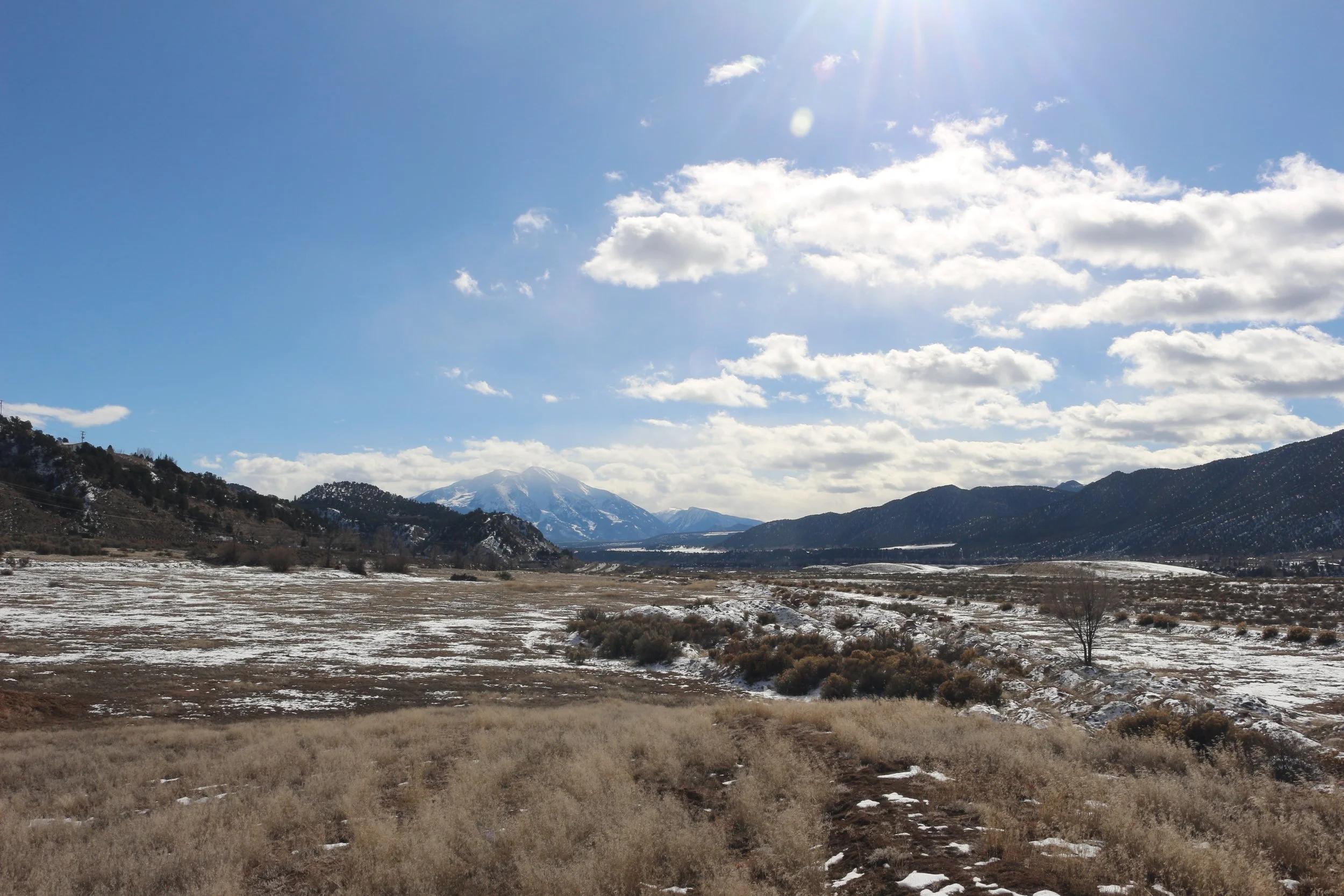
The proposed site of the Harvest Roaring Fork Development at Cattle Creek between Carbondale and Glenwood Springs. Photo by Steve Kuschner
Hundreds of residents from across the Roaring Fork Valley showed up to participate in the public review of the Harvest Roaring Fork PUD (development proposal). The February 25th Planning Commission hearing drew more than 500 people, a record-breaking turnout. Nearly 300 more attended the March 11th public input hearing, with hundreds more watching remotely on Zoom. Many waited hours for their turn to speak, then returned weeks later for three minutes at the microphone, sharing their concerns thoughtfully and respectfully.
The public response extended well beyond the hearing rooms. More than 1,300 community members signed a petition opposing the development, and Garfield County received hundreds of letters and emails expressing concerns. Regardless of where people stand on the project, the level of engagement was astounding. These hearings showed just how deeply people care about our valley and how determined we are to have a voice regarding growth and its impacts.
Understanding the Project
At the center of these hearings was the proposed Harvest Roaring Fork Planned Unit Development (PUD), a 230-acre, dense new city located between Glenwood Springs and Carbondale along Highway 82. This land is the former Sanders Ranch/Bair Chase, a long-standing rural ranch land and the last open space between the two towns.
In a move that shocked many community members, the developer appears to expect Garfield County to either rewrite its long-standing development standards and goals, or disregard them altogether, to approve a proposal that clearly fails to meet the county’s code and comprehensive plan.
The developer calls it a “village,” likely to make the project feel smaller than it is. In reality, it’s a full-blown new city. At full build-out, the proposal includes roughly 1,500 homes, 75 ADUs, commercial space, a 120-room hotel, and nine distinct residential neighborhoods connected by new roads and infrastructure. The development could add up to 5,000 new residents to a rural corridor currently outside Glenwood Springs city limits.
To put this in perspective, the entire town of Basalt, including the Willits development, covers just 1,280 acres and has about 4,000 residents. The Harvest Roaring Fork project alone could house more people than all of Basalt, making it the largest single development ever proposed in the Roaring Fork Valley
For many in our community, the question isn’t whether housing is needed, most agree that it is. The question is whether a proposal at this scale, intensity, and location aligns with Garfield County’s long-term planning goals and development standards. That’s what the Planning Commission needed to evaluate.
What County Staff Found
At the February 25th hearing, Garfield County’s Community Development Department presented its official staff analysis, a required part of the PUD review process. Staff concluded that the proposal, as submitted, raises serious concerns regarding compliance with the county’s 2030 Comprehensive Plan and Land Use Development Codes.
Key issues staff identified included:
Density and compatibility with the rural character of the corridor
Traffic and infrastructure capacity
Wildlife impacts
Water use
Missing elements required for a PUD, including a detailed sketch plan showing lot layouts
Staff also noted that the developer’s “form-based structure” is not recognized under Garfield County codes. This type of zoning is designed for urban areas like Denver. Staff warned that if approved, this approach could allow major changes later without the predictability required in the county’s process.
In short, staff concluded the application did not meet multiple county standards and recommended denial. While staff recommendations carry weight, the Planning Commission and ultimately the Board of County Commissioners make the final decisions.
Housing: The Heart of the Debate
At the hearings, the developer repeatedly emphasized workforce housing, pointing to 150 permanently deed-restricted “affordable” homes and 300 so-called “resident-occupied” units as a major community benefit. In reality, the 150 affordable homes are the only units with clear, permanent protections, aligning with Garfield County’s existing 10% requirement. The remaining 1,350 homes, including the 300 “resident-occupied” units—function much more like market-rate housing. While these units are intended for individuals working in Garfield, Eagle, or Pitkin County, they are not income-restricted and have no price caps. More importantly, there is limited clarity around how these occupancy requirements would be enforced over time or whether they are guaranteed to remain in place upon resale. Garfield County staff have raised concerns that it’s unclear how these rules would be enforced or whether they would actually last over time. Without permanent deed restrictions and clear oversight, these units risk transitioning into the broader market over time. As a result, the “resident-occupied” designation raises serious questions about whether it provides meaningful, lasting workforce housing, or primarily serves as a way to present the project as a community benefit without providing a lasting housing solution.
At the February 25 hearing, the developer presented an example showing construction costs for a permanently affordable unit at approximately $412,000, specifically noting this reflected building costs only. That figure does not include land, financing, taxes, insurance, HOA dues, or potential special district costs, all of which would significantly increase the total cost to homeowners. The developer also indicated that the 300 “resident-occupied” units could fall in the range of roughly $475,000 to $575,000. While exact monthly payments will vary, these price points raise important questions about whether these units will truly be attainable for the Garfield County workforce they are intended to serve, particularly when considering the full cost of owning a home in today’s market.
Many residents pointed out that these price points would put the homes out of reach for teachers, sheriff’s deputies, healthcare workers, service industry staff, and small business employees in Garfield County. Several speakers also noted that wages in Eagle and Pitkin Counties are higher, raising concerns that these homes could ultimately be occupied by workers from the Aspen and Vail areas rather than the local Garfield County workforce.
For many in the community, the question is clear: who will this proposed new city actually serve?
Traffic, Infrastructure, and Safety Concerns
Traffic along Highway 82 is already heavy. The corridor currently carries roughly 27,000 vehicle trips per day. At full build-out, Harvest could add an estimated 12,000 daily trips, bringing total traffic to roughly 39,000 trips per day.
Highway 82 cannot be expanded, therefore, to manage access, the Colorado Department of Transportation proposed a Reduced Conflict Intersection (RCI), where drivers turning from side roads must first turn right, accelerate, change lanes and then make a U-turn at a signaled median opening. While RCIs are used elsewhere, they’ve never been implemented in Colorado. Residents raised concerns about heavy trucks, school buses, and daily commuter flows using this system.
Other traffic concerns included:
Existing intersections, including Cattle Creek Road, Highway 133, and Thunder River/Spring Valley/CMC Road, are not addressed in the developer’s traffic analysis for improvements or upgrades.
Construction traffic over many years, gravel trucks, concrete mixers, and other vehicles, would traverse the corridor during the project’s lengthy phases
Wildfire evacuation, Highway 82 serves as the primary route for thousands of residents. Adding thousands more raises questions about evacuation safety.
The developer assumes many new residents will relocate from west of Glenwood, particularly Rifle, and rely on public transportation (RFTA). Speakers questioned this assumption, noting that incomes in those areas do not align with these housing costs. The developer also claimed the site is not in a wildfire hazard zone and that residents could “shelter in place” in case of fire, an assertion that many in the community found deeply concerning.
Water in a Drying Valley
Water is critical in the Western Slope’s arid environment. The developer has water rights from the Glenwood Ditch and the Roaring Fork River. Residential consumption alone is projected to consume 65.77 acre-feet per year, roughly 22 million gallons annually, permanently removed from the watershed after sewage is treated and returned to the river. These 22 million gallons of water do not include water for landscaping, irrigation, commercial operations, or the proposed hotel, which would consume millions more gallons of water annually. More water gone forever. The proposal also includes a large sewer pipe across the Roaring Fork River and a new road and bridge over the Cattle Creek riparian area, permanent intrusions into sensitive river corridors and wetlands that threaten water quality, wildlife, and the floodplain.
Wildlife and Habitat
The property sits within a key wildlife corridor. Local experts and conservation organizations testified that the development would fragment habitat used by deer, elk, bears, raptors, and other species that move through this stretch of the valley.
Some disagreement emerged between the developer’s wildlife consultant and local experts about the extent of wildlife activity. While the developer’s biologist suggested community concerns were “emotion-based,” residents and conservation groups presented observations and photographs showing real, current wildlife activity on this land.
For many speakers, the question isn’t just whether animals currently use the land, but how a large-scale development could permanently disrupt migration patterns and destroy critical habitat over time.
Community Voices
Public testimony on March 11th was powerful and wide-ranging, reflecting just how much our community cares. Residents spoke passionately about traffic, housing affordability, wildfire evacuation, wildlife habitat, water resources, medical services, and the character of the Roaring Fork Valley. Experts from local conservation organizations and wildlife groups backed these concerns with data and observations, while the Cattle Creek Confluence Coalition highlighted how the project conflicts with county codes and the comprehensive plan. Together, the hundreds of voices in the room and online, along with more than 1,300 petition signatures and countless letters and emails, made it unmistakably clear: this valley’s community members demand thoughtful, responsible growth that respects our land, our wildlife, and our community.
The Planning Commission’s Decision
After hearing staff reports, developer testimony, and public comments, the Garfield County Planning Commission weighed the proposal. Commissioners raised concerns about:
The form-based PUD structure, not allowed under current county standards
Absence of a required sketch plan
Infrastructure capacity
Numerous unresolved details
Several commissioners noted that while they appreciated the developer’s effort to include workforce housing, the proposal relied too heavily on promises and commitments that were not clearly defined in the application. In the end, the Planning Commission voted 6–1 to recommend denial, citing misalignment with Garfield County’s Comprehensive Plan and Land Use Development Code. In doing so, they underscored a core issue: the developer, audaciously from the start, has been asking the county to bend its well-established rules and standards to fit a project that, on its face, fails to meet those very codes — rather than bringing the project into compliance.
What Happens Next
The Planning Commission’s recommendation is just that, a recommendation. The Board of County Commissioners (BOCC) are not required to follow it.
At this stage, the developer can take the proposal, as it currently stands, to the BOCC, who will make the final decision. If minor changes occur, the project could still advance. If changes are significant, the developer must submit a new application to Garfield County and restart the review process.
A Community Conversation
Whatever happens next, these past weeks have shown something inspiring. Our community showed up, spoke up, listened, and asked questions. We engaged in a difficult conversation about growth, infrastructure, environmental stewardship, and the future of our valley.
Growth will continue in the Roaring Fork Valley. That’s not in dispute. But thoughtful growth requires careful planning, respect for standards, and honest evaluation of long-term impacts on infrastructure, natural resources, and the character of the place we live.
The Planning Commission’s recommendation reflects a willingness to weigh these factors thoughtfully, but the process isn’t over, continued community participation remains essential.
Our voices truly matter. The future of this valley, its landscapes, wildlife, roads, water, and communities, belongs not just to Garfield County, but to all of us across the Roaring Fork Valley and beyond. Decisions made here will ripple through neighboring counties and set precedents for how Colorado protects the places we love.
Now is the time to pay attention, speak up, and ensure that growth in our valley is responsible, sustainable, and reflects the values of the people who call this place home. This is our valley, our water, our wildlife, and our future. We cannot afford to sit on the sidelines.
